Warith Deen Muhammad & Followers — Pseudo-Scholarship and Unfounded “Studies”
Bismillāh.
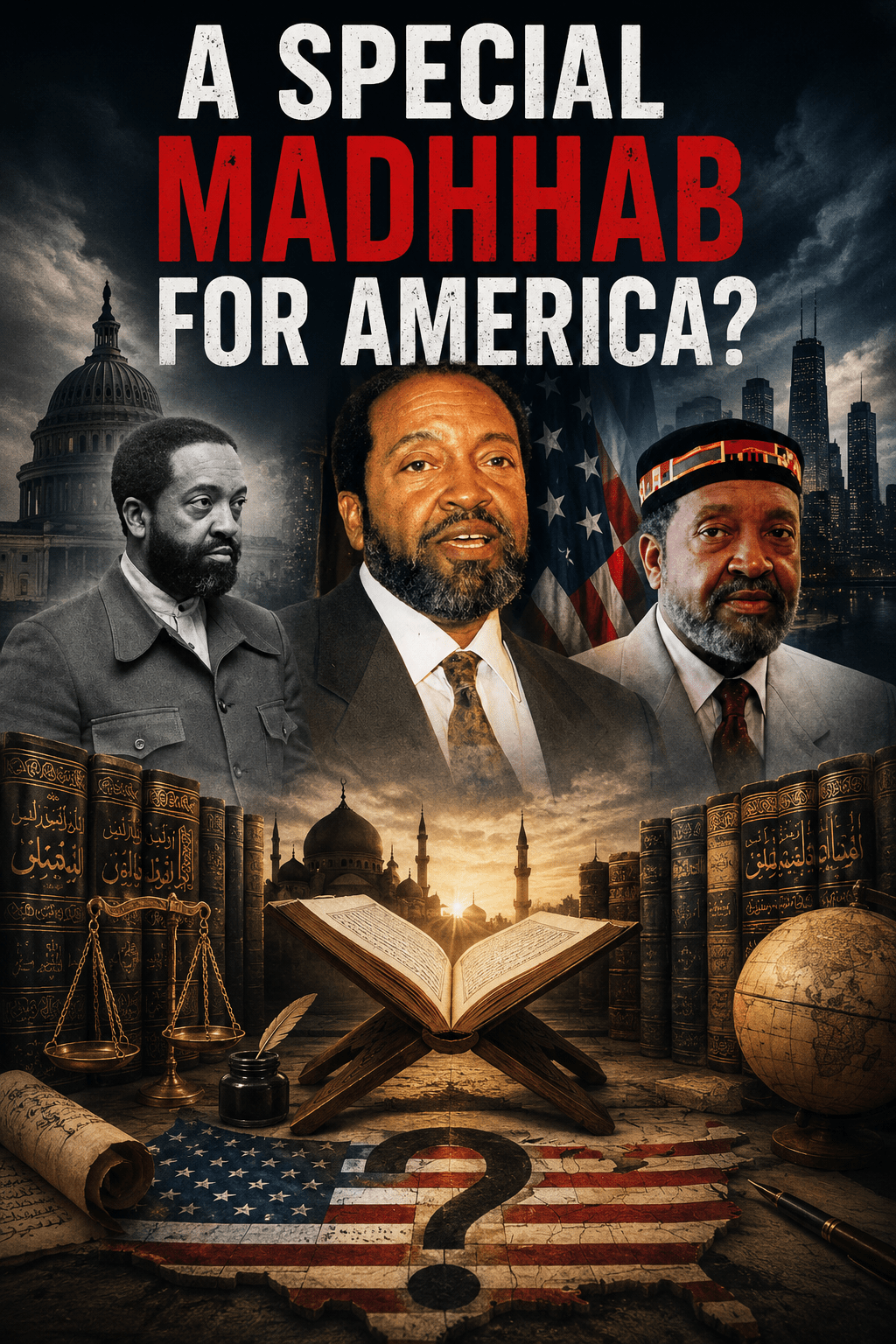
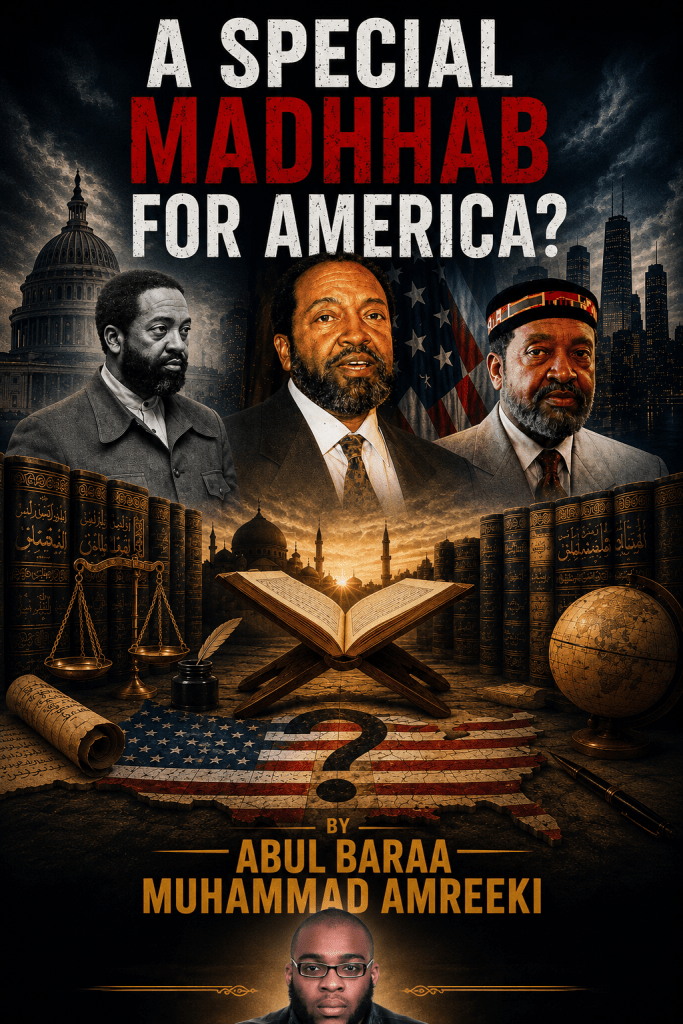
This discourse addresses the claim—recently circulated by some followers of Warith Deen Muhammad (W.D. Muhammad)—that Muslims in America require a special madhhab unique to this land. The claim was advanced in a video concerning “Muslims in America,” asserting the need for a particular manhaj (method) or madhhab for America, without first studying or returning to the established principles of Islamic jurisprudence (fiqh) derived from the Qur’ān and the Sunnah, and without grounding themselves in a recognized madhhab from among the well-known schools prevailing in the Muslim world.
I mentioned in that previous video—and I reiterate here—that there is absolutely no way one becomes a faqīh (jurist) or a major scholar of Islam while neglecting what the earlier scholars have said on the issues. This is among the delusional notions put forward by certain followers of W.D. Muhammad, people who have no connection to true Islamic scholarship. Islamic knowledge is not wishful thinking; it is not acquired by skimming translations, listening to a few English lectures, or dabbling in scattered topics. The Islamic sciences are deep, structured disciplines with defined fields and methods.
Tonight’s topic therefore expands upon: What are the Islamic sciences? And to those individuals—from the Warith Deen community—who carry the idea that these sciences are unimportant while calling for “a special madhhab in America,” we must respond with clarity.
I stated—and I state again—there is no madhhab constructed upon culture. Some people argued in the comments: “The Muslims in Alaska are not like the Muslims in the Sahara.” I replied: Ṣalāh is farḍ in the Sahara just as ṣalāh is farḍ in Alaska. Such statements reveal ignorance—i.e., those making them have no firm foundation in faith and possess no Islamic education in fiqh. No matter how much one listens to W.D. Muhammad, he is not an ‘ālim, he is not a faqīh, and he is certainly not a scholar of fiqh. You cannot take a bundle of his English lectures and books and then declare, “Now it is time to develop our fiqh or a sixth madhhab for America, based on our culture.”
I repeat: there is no madhhab in Islam founded upon people’s customs. In fiqh, rulings (masā’il) are built upon the Qur’ān and the Sunnah. Yes, ‘urf (custom) has a subordinate place within fiqh—as recognized by the jurists—but ‘urf does not found an independent madhhab. Because many followers of W.D. Muhammad lack a sound understanding of the Islamic sciences (particularly fiqh), they fail to distinguish between ‘urf (customs) and the legislated rulings extracted from the Qur’ān and Sunnah through the usūl and maxims of jurisprudence.
To say, “The people in Alaska need a special madhhab for Alaska,” makes no sense to anyone who has actually studied fiqh. Any faqīh, serious student, or ‘ālim who hears such a statement recognizes it as a sign of profound ignorance of the Islamic sciences.
On the Islamic Sciences and Their Prerequisites
From my experience, some in the Warith Deen community speak of a “sixth madhhab for America,” yet when one asks them about the basic Islamic sciences required by every scholar—every faqīh—they neither possess them nor even know what they are.
I have asked many of them—on Facebook, in discussions, and even in video comments—and they become upset when asked simple, foundational questions:
- What are the core fields and subjects of fiqh within a madhhab?
- What are the principal subjects of fiqh that a faqīh and his students must master?
- What are the conditions (shurūṭ) that qualify a person to be followed in his legal views?
The vast majority from the Warith Deen community do not know what the subjects of fiqh actually are. If you say “ṣalāh,” that is obvious—Muslims pray. But what else? What are the subjects in fiqh that a faqīh must master? If a person will be a jurist—let alone associated with a madhhab—what are the fiqh subjects? Most do not even know the names of the subjects.
Moreover, beyond listing subjects, what qualifies a person to be an ‘ālim whose opinions are followed? They do not know. So when you make these calls for “a special madhhab for America,” you reveal that you neither know what constitutes a madhhab, nor what its subjects are, nor what is required to be a scholar within it. And if you do not know the requirements, certainly you do not possess them. If you do not know them, you do not have them.
Essential Qualifications (Before One Even Speaks of a Madhhab)
- Arabic Language.
A foundational condition for scholarship. One cannot understand the Qur’ān or the Sunnah through translations. Memorizing translations is not Qur’ān. A scholar cannot be an ‘ālim al-muqallid—a blind follower—especially of translations. - Arabic Literature and Adab.
Mastery of language includes grammar, rhetoric, morphology, usage, and the literary heritage that frames meaning. - Familiarity with the Qur’ān and Its Rulings.
Knowledge of the aḥkām al-Qur’ān, its sciences, its tafsīr, and the methodology of interpreting verses related to rulings. - Mastery of the Sunnah.
Familiarity with the kutub al-sunnah (canonical hadith collections), their explanations, and the statements of the scholars regarding them—in Arabic. This includes knowledge of muṣṭalaḥ al-ḥadīth (hadith methodology), grading, defects, corroborations, shudhūdh, etc. - Acquaintance with the Statements of the Scholars.
Knowledge of the differences among jurists, the comparative strength of evidences, and the positions across the established madhāhib.
And these points are before we even begin to discuss inventing a new madhhab “for America.” If you lack these, you have not even reached the gate.
Further, a faqīh must be conversant with the subjects of fiqh—not five or ten, but dozens upon dozens, with each subject comprising many sub-chapters, details, conditions, exceptions, evidences, and disputations. Many estimate upward of sixty, eighty, or more distinct areas. Consider only the pillars of Islam:
- Ṭahārah: Every issue related to purification—types of water, impurities, vessels, major/minor ritual impurity, menstruation/postpartum bleeding, and their rulings.
- Ṣalāh: Farḍ and nafl; times; conditions; integrals (arkān); obligations (wājibāt); invalidators; rulings for travelers, the sick, pregnant; congregation; sujūd al-sahw; jumu‘ah; janā’iz—and far more.
- Zakāh: Categories, thresholds (niṣāb), distributions, recipients, agricultural produce, livestock, trade goods—complex, detailed.
- Ṣiyām: Beyond Ramaḍān—who must fast, exemptions, moon-sighting, what breaks the fast, compensations and expiations—dozens of issues here alone.
- Ḥajj/‘Umrah: Manāsik (rites) in detail; prohibitions of iḥrām; penalties (fidāyā); invalidations; combinations of rites; errors and their consequences.
And this is still the beginning. We have not entered the vast fields of:
- Mu‘āmalāt (transactions): sales, leases, partnerships, guarantees, agency, usury, insolvency.
- Nikāḥ and Ṭalāq: marriage, dowry, guardianship, conditions, annulments, revocable/irrevocable divorce, khul‘, custody, maintenance (nafaqah).
- Al-Aymān wal-Nudhūr (oaths and vows).
- Aṭ‘imah wa’l-Aḍāḥī (foods and slaughter).
- Ashribah (drinks).
- Al-Waṣāyā (wills).
- Al-Farā’iḍ (inheritance) — a massive discipline on its own.
- Al-Luqaṭah (lost and found).
- Al-Jihād (its fiqh and conditions).
- Aḥkām al-Riq (historical rulings on slaves).
…and more.
A faqīh is not merely a collector of fiqh issues; he must have grounding in uṣūl al-fiqh (the legal theory by which rulings are extracted), qawā‘id fiqhiyyah (legal maxims), muṣṭalaḥ al-ḥadīth, and the ‘ulūm al-Qur’ān. He must understand why the imams differed—often because of the strength or weakness of a hadith, the authenticity of a chain, or the applicability of a general text to a specific case. Without uṣūl, how does one weigh the position of Abū Ḥanīfah against ash-Shāfi‘ī on a given matter? How does one know which evidence is stronger?
And we have not yet discussed the Arabic language in its breadth—the very instrument of the Revelation. You cannot open the classical books without it.
So I say to the followers of W.D. Muhammad: if you do not even possess these prerequisites, how can you speak of a madhhab for America? Who among your ranks fulfills these conditions? Who has traversed this path? If I then ask you to enumerate the core subjects of fiqh—not merely ṣalāh and ṣawm—but their sub-chapters and debates, many are silent. Some of these subjects contain 20, 50, even 100 sub-issues. And that is one chapter.
What then of fatāwā—volumes upon volumes across centuries? Enter any law library and see its expanse. Our legal heritage is at least as vast. Are you familiar with it? If not, on what basis do you announce a new madhhab?
Some of you cannot recite al-Fātiḥah correctly, yet you speak of founding a madhhab. In the path of knowledge, one begins from the basics, ascending level by level. One does not leap to the highest branches without first mastering the roots.
The Grave Risk of Speaking Without Knowledge
When such unfounded claims are preached—“We need a special American madhhab”—the first verse that comes to mind is our daily supplication in Sūrat al-Fātiḥah: “Guide us to the Straight Path, the path of those upon whom You have bestowed favor—not of those who have earned anger nor of those who are astray.” The people of ḍalāl (misguidance) worship without knowledge. They speak about Allah’s religion without proof. Whoever mixes personal fancy with the dīn becomes like those astray. We beg Allah to keep us away from such a path.
In Islam, there is no room for “wishful thinking” in law and creed. Either one knows, or one does not know. There is no “half-knowing” in issuing fiqh positions. We do not freestyle in the dīn, nor do we adopt whatever “sounds good.”
Therefore, when you hear brothers or sisters insist that America needs its own special madhhab while they themselves lack Islamic knowledge, have no proofs from Qur’ān and Sunnah, and cannot even outline the essentials of fiqh—know that this is empty talk. This does not make one an ‘ālim. Good character comments from a foreign shaykh about W.D. Muhammad do not transform him into a jurist. We examine a man’s books, evidences, and methods; in those works are many serious errors no seasoned scholar would make. In many Muslim lands, even children do not fall into some of the theological mistakes found among your speakers.
I do not say this to mock anyone, but to warn. There are criteria—and you do not fulfill them. That is why there is no “sixth madhhab” of America, and why no one respects such a claim. When those who actually possess knowledge sit with you and hear talk of a special American madhhab, yet find you cannot navigate the basics of ṭahārah or analyze a hadith—nor read Arabic—what do you imagine they will conclude?
Misused Terminology and Imported Philosophy
Some say, “We have our own school of thought.” What do you mean? In Arabic, what is the root and usage of madhhab? Do you know? Or is this the philosophical “school of thought” imported from modern discourse? If you do not even know the origin or meaning of the term in our legal tradition, why make grand claims around it?
As Black people, we must get ourselves together. Do not speak about building a madhhab when you do not know the wājibāt and arkān of wuḍū’, nor the areas of scholarly disagreement related to them. If you do not recognize the terms, how will you debate the rulings?
If one says, “We need our own scholars,” this is respectable—and it requires investment, time, sacrifice, and placing our children on that path. Without that, there will be no result. I have not, to this day, met any ‘ulamā’ produced from the Warith Deen community. In fact, among those who sought knowledge from your ranks, many eventually distanced themselves, not out of arrogance, but because they could not find seriousness about Islamic knowledge among you.
You cannot “establish” fiqh without the uṣūl of the dīn. Otherwise, it is preaching for applause—gratification by grand speech—without substance. When asked, “Where is your knowledge? Where are your foundations?” the answers vanish.
The Reality of Advanced Discourse
Have you ever watched a debate between a genuine academic and a layman pretending to expertise? The layman does not recognize even basic terminology. He appears foolish to those who know. This is what happens when some in the Warith Deen community insist on a “sixth madhhab,” while immigrants from longstanding Muslim societies—who at least learned the basics—listen and find you cannot even recite al-Fātiḥah correctly or list essential fiqh requisites.
When we mention simple fiqh terminology—ḥukm, sabab, sharṭ, māni‘; distinctions like ṭahārah vs. ṭuhūr; or ask the difference between ḥadath and khabath—and you do not know what we mean, then how can you speak of founding a madhhab? These are elementary matters—in Arabic—for beginning students.
It is like internet “health experts” prescribing cures they do not understand, harming people due to ignorance. Practicing medicine without license is forbidden because it destroys bodies. The dīn is more serious, because it concerns the Hereafter—forever. Playing games with the religion invites Allah’s punishment.
So when one claims, “We shall establish a special madhhab for America,” we must ask: What are your qualifications? Saying “W.D. Muhammad said…” carries no weight in fiqh. In Islam, what weighs is evidence from the Qur’ān and Sunnah with the understanding of the scholars. If, by Allah’s decree, a recognized madhhab were ever to arise in America one day, it will not come from people who despise the prerequisites of knowledge and refuse to learn them.
Many among you say, “We are not Arabs.” The Qur’ān is in Arabic. The Sunnah is preserved in Arabic. The terminologies of fiqh number in the thousands, and the terms and expressions across all the religious sciences may reach into the hundreds of thousands. How then do you speak of building a madhhab while rejecting the very tools by which rulings are known?
Closing Admonition
This is not to belittle anyone. It is a sincere counsel: there are criteria—shurūṭ—and real tools required before one can speak in fiqh, let alone claim a madhhab. If you insist that “America needs its own madhhab,” begin by producing students who master Arabic, memorize Qur’ān, learn Sunnah and muṣṭalaḥ, sit years in the classical texts of uṣūl al-fiqh, traverse the chapters of fiqh with their evidences, and then apprentice under people of knowledge until they can weigh proofs and understand why the imams differed. Then—and only then—could such talk be entertained by other scholars, not by yourselves about yourselves.
Until that day, abandon this pseudo-scholarship. Return to the Book and the Sunnah upon the understanding of the Salaf of this Ummah. Respect the established madhāhib and learn from them. If you truly desire scholars for America, invest in the long road that produced the imams of old—not in slogans about “a special madhhab for America” while the basics of wuḍū’, ṭahārah, and al-Fātiḥah remain unknown.
Wa’Llāhu’l-Musta‘ān, wa ‘alayhi’t-tuklān.






Leave a Reply