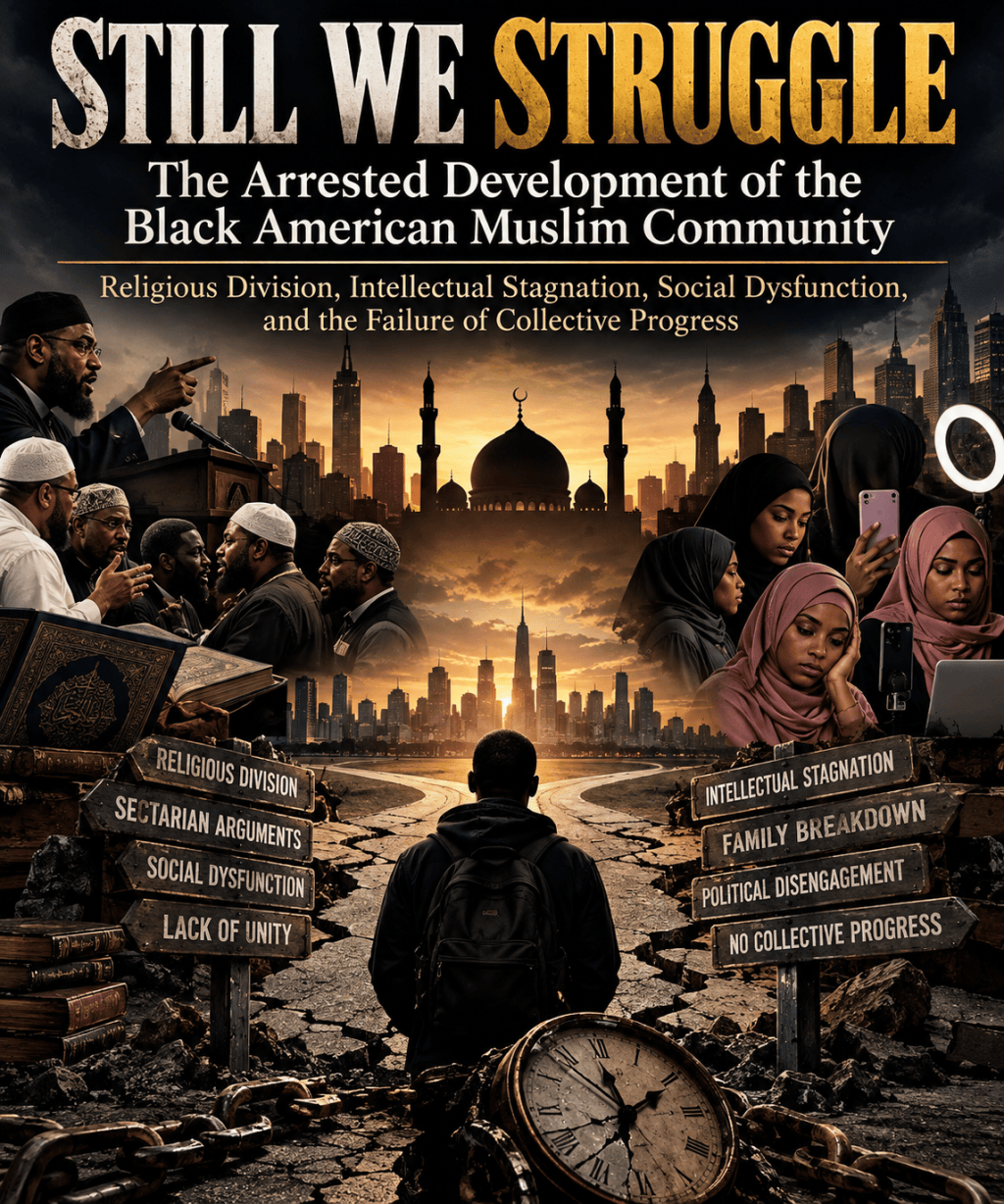
Some of the Problems in the Black American Muslim Community
The Black American Muslim community is not geared toward fixing problems in the Black community. When you look at the Black American Muslim community, you will find religious beefs, arguments, fighting, disagreements, and a lack of unity. There is no collective effort to fix the social, political, economic, and spiritual problems in the Black American Muslim community.
What you see instead is fighting and disagreement over religious groups and sects, along with religious and political arguments that originated in other countries centuries ago. These old political and religious conflicts from centuries ago in the Muslim world are being brought into the Black American Muslim community in America.
Instead of preaching and promoting things that unite Muslims, you find many Black American Muslims, especially on social media, engaging in centuries-old rhetoric, political disagreements, and religious arguments that have nothing to do with America, Black people in America, current political events, or issues directly related to Black American Muslims today.
Because of self-hate, they are unable to come together and fix the problems within their own community. Instead, many people, or many individuals in our community, latch onto these debates and arguments, which waste a lot of our people’s time.
Different Segments of Dysfunction and Disunity in the Black American Muslim Community
We have different segments and divisions within our community, each focused on different types of dysfunction and disunity.
1. The Black Imams Roundtable
One example is the Black Imams Roundtable. The title and label, Black Imams Roundtable, might lead you to believe that the organization focuses on discussing and addressing Black social issues within the Black American Muslim community. However, if you examine their rhetoric, you will find that much of their focus is on the Ash’ari creed and fighting and arguing with Muslims to blindly follow their particular sect. They prioritize debates and arguments that, in my view, lack a sound foundation in the Qur’an and Sunnah.
They busy themselves with calling people toward positions that contribute to disunity and disruption within the Muslim community. This is particularly concerning when considering that the Prophet Muhammad (peace and blessings be upon him) and his Companions did not follow the Ash’ari creed, which developed after their time, during later centuries of Islamic history.
Rather than focusing their efforts on addressing the social, political, economic, educational, and spiritual problems affecting Black American Muslims, these religious disputes take center stage. The question is why so much time and energy are being devoted to these disagreements instead of working collectively to address the problems facing our community.
2. Segments of the Salafi Community
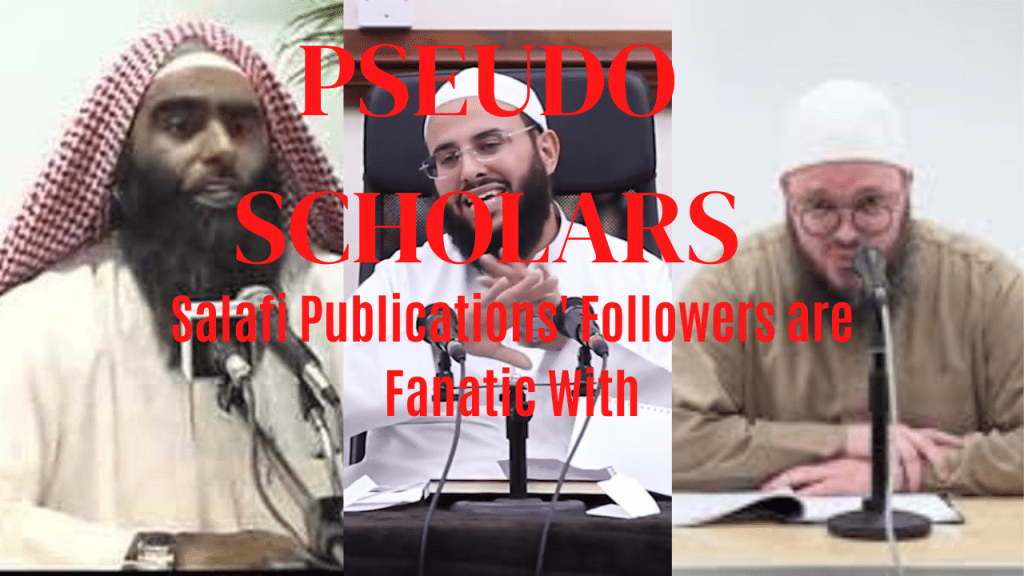
Then you have another segment of the Muslim community: the Salafi community. Certain segments of this community, including individuals associated with Germantown Masjid in Philadelphia, such as Anwar Wright, Hassan Somali, and their associates, are, in my view, examples of individuals who use the ignorance of people within their community to call them toward their particular group. At the same time, they neglect the Black social issues that many Black American Muslims experience throughout the United States, particularly within their own communities.
When you look at Germantown Masjid in Philadelphia, you can find many of the same types of social dysfunction that plague the broader Black community also existing within its community. These problems include low intellectual development, cult-like behavior and following, a lack of Islamic knowledge, limited proficiency in the Arabic language, and a lack of understanding of usul (foundational principles) and the different branches of Islamic knowledge.
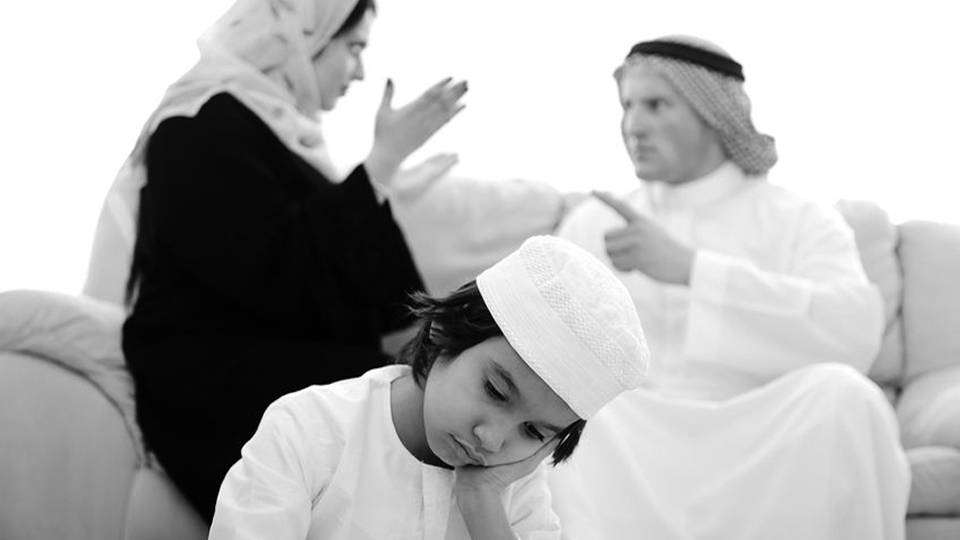
Other problems include a lack of education, high divorce rates within the community, mental health struggles, and a lack of political engagement in efforts to empower the Black community.
Rather than prioritizing these issues, certain individuals are busy calling people toward their group, arguing and debating with other Muslims, and, according to the criticism being raised here, engaging in physical aggression against those who disagree with them.
The question is this: Why is so much energy being devoted to group affiliation, religious disputes, and arguments while the social, educational, economic, political, and mental health problems affecting Black American Muslims remain unaddressed? If these individuals are concerned about the well-being of the Muslim community, why is there not a greater collective effort to address these problems and empower Black American Muslims?
3. Black Muslim Women, Pink-Pill Rhetoric, and Feminist Talking Points
Then we have another segment of the community: Black Muslim women, particularly those who promote what is commonly referred to as pink-pill rhetoric and feminist talking points under the banner of advocating for Muslim women’s rights.
Many of these women promote rhetoric centered on women’s independence from men, talking down about men, and expressing viewpoints that, in my assessment, are not supported by the Qur’an and Sunnah. They create video content that quotes or promotes pink-pill and feminist rhetoric while presenting it as standing up for Muslim women’s rights.
At the same time, they neglect the importance of learning Islamic law, understanding the rights of men in Islam, understanding the rights of women in Islam, and examining the Islamic principles governing family structure and the responsibilities of both men and women.
Rather than grounding their discussions in Islamic scholarship, some rely on feminist talking points, pink-pill rhetoric, and content creators whose platforms revolve around criticizing men and portraying them negatively. Their content repeatedly returns to complaints about men, often presenting negative relationship experiences as if they represent the general reality of Muslim men.
Examples of this rhetoric include:
– Generalizing about Muslim men: Taking negative experiences with individual men and using them to portray Muslim men as a whole as abusive, controlling, emotionally immature, or incapable of being good husbands.
– Promoting independence as opposition to men: Presenting women’s independence as requiring them to reject men’s leadership, involvement, or contributions to marriage and family life, rather than examining the specific Islamic principles governing these responsibilities.
– Treating marriage as a disadvantage for women: Framing marriage, traditional family responsibilities, or a wife’s obligations as inherently oppressive while giving little attention to the mutual rights and responsibilities established in Islam.
– Encouraging hostility toward men: Repeatedly creating content that mocks, belittles, or condemns men, rather than distinguishing between genuine misconduct and the character of men generally.
– Using personal experiences as universal evidence: Treating failed marriages, negative relationships, or personal grievances as proof that Muslim men generally are unsuitable for marriage.
– Substituting feminist rhetoric for Islamic scholarship: Using popular social media talking points to discuss women’s rights while neglecting the Qur’an, authentic Sunnah, Islamic jurisprudence, and the scholarly discussions concerning the rights and responsibilities of both spouses.
The problem is not that Muslim women speak about abuse, injustice, mistreatment, or violations of their Islamic rights. These are legitimate issues that deserve serious attention. The problem arises when legitimate concerns are used to promote sweeping generalizations, hostility toward men, or positions that are not adequately grounded in Islamic evidence.
You also find that many of these content creators spend their time complaining about men and promoting negative narratives about relationships. In my observation, many of the women who participate in this rhetoric are single, divorced, or dealing with painful relationship experiences, and some appear to lean heavily toward feminist interpretations of relationships. These circumstances do not automatically invalidate their opinions, but they raise questions about whether personal grievances are influencing the broader messages being promoted to other Muslim women.
Instead of encouraging Muslim women to acquire sound Islamic knowledge, understand their rights and responsibilities, develop critical thinking skills, and build healthy Muslim families, these platforms can encourage resentment, distrust, and division between Muslim men and women.
The central issue is that we cannot claim to be defending Muslim women’s rights while neglecting the broader Islamic framework governing marriage, family structure, and the mutual rights and responsibilities of men and women. Nor can we build a healthy Black American Muslim community if our social media platforms continually encourage men and women to view one another as adversaries.
The Larger Problem
These examples illustrate a broader problem within the Black American Muslim community: different segments are consumed by their own religious disputes, group affiliations, ideological conflicts, and personal grievances, while the social problems affecting our people continue.
Whether the issue involves religious sectarianism, group loyalty, a lack of Islamic education, mental health struggles, family breakdown, political disengagement, or hostility between Muslim men and women, the underlying question remains the same: Where is the collective effort to address the problems affecting Black American Muslims?
We need to move beyond endless arguments and divisive rhetoric. We need to develop a community that prioritizes sound Islamic knowledge, critical thinking, education, family stability, mental health, economic development, political awareness, and the social well-being of Black American Muslims.
If we cannot come together to address these problems, then our religious discussions, social media debates, and competing group affiliations will continue to consume our time without producing meaningful improvements in the lives of our people.
Arrested Development and the Future of the Black American Muslim Community
If individuals cannot recognize these issues, along with the many other problems that exist or continue to develop within our community, then we can collectively say that the Black American Muslim community has not reached the level of intellectual maturity necessary to acknowledge and address these issues.
If we cannot acknowledge these problems, then we certainly cannot collectively develop or implement solutions to them.
Because of this lack of maturity, collective responsibility, and unity within the Black American Muslim community, we risk remaining stuck in a state of arrested development.
We continue to see the same old arguments that I witnessed in the 1980s, the 1990s, and the early 2000s within the Black American Muslim community. Decades have passed, yet we continue to struggle with the same problems: a lack of growth, a lack of intellectual development, a lack of critical thinking, and a lack of a strong collective foundation in Islamic knowledge.
I am not talking about a few individuals who study Islam, acquire knowledge, and benefit from their efforts. There will always be individuals who pursue Islamic scholarship and develop a deeper understanding of the religion. I am talking about the community collectively. The question is whether we, as a community, are developing the intellectual maturity, critical thinking skills, Islamic knowledge, and collective responsibility necessary to address our problems and improve our condition.
If we continue along this path, we must seriously question whether the Black American Muslim community, as a collective, has a sustainable future in this country. A community that cannot acknowledge its problems, critically examine its shortcomings, and work collectively toward solutions will struggle to grow, develop, and establish a strong foundation for future generations.
What we may see in the coming years is an increase in the number of people leaving Islam. Some individuals may enter the religion and later leave because of the dysfunction, disunity, and unresolved problems they encounter within the community. Others who have been Muslims for many years may also leave the religion because of their experiences with these same issues.
There may also be individuals who acquire Islamic knowledge, benefit from their studies, and make personal progress. However, even if certain individuals continue to grow intellectually and religiously, that does not necessarily mean the community as a whole is progressing.
Individual growth is not the same as collective development.
If we fail to address these longstanding problems, we may find ourselves in the same position years from now, having the same arguments, repeating the same mistakes, and failing to make meaningful progress.
Ultimately, we will remain trapped in a state of arrested development, with little collective growth, limited intellectual progress, weak critical thinking, and no unified strategy for addressing the social, political, economic, spiritual, and educational challenges facing Black American Muslims.
The question we must ask ourselves is this: How much more time are we going to spend repeating the same arguments and perpetuating the same dysfunctions before we collectively decide to grow, develop, and work toward meaningful solutions?
By Abul Baraa Muhammad Amreeki





Leave a Reply