بِسْمِ اللَّهِ الرَّحْمَٰنِ الرَّحِيمِ
إِنَّ الْحَمْدَ لِلَّهِ، نَحْمَدُهُ، وَنَسْتَعِينُهُ، وَنَسْتَغْفِرُهُ، وَنَعُوذُ بِاللَّهِ مِنْ شُرُورِ أَنْفُسِنَا وَمِنْ سَيِّئَاتِ أَعْمَالِنَا. مَنْ يَهْدِهِ اللَّهُ فَلَا مُضِلَّ لَهُ، وَمَنْ يُضْلِلْ فَلَا هَادِيَ لَهُ.
وَأَشْهَدُ أَنْ لَا إِلَٰهَ إِلَّا اللَّهُ وَحْدَهُ لَا شَرِيكَ لَهُ، وَأَشْهَدُ أَنَّ مُحَمَّدًا عَبْدُهُ وَرَسُولُهُ.
اللَّهُمَّ صَلِّ وَسَلِّمْ وَبَارِكْ عَلَىٰ مُحَمَّدٍ وَعَلَىٰ آلِهِ وَأَصْحَابِهِ أَجْمَعِينَ.
أَمَّا بَعْدُ:
In the name of Allah, the Most Merciful, the Bestower of Mercy.
Indeed, all praise is due to Allah. We praise Him, seek His help, and seek His forgiveness. We seek refuge in Allah from the evils within ourselves and from the consequences of our deeds. Whomever Allah guides, none can misguide; and whomever He allows to stray, none can guide.
I bear witness that there is no deity worthy of worship except Allah alone, without partner, and I bear witness that Muhammad is His servant and Messenger.
O Allah, send Your prayers, peace, and blessings upon Muhammad, and upon his family and all of his companions.
To proceed:
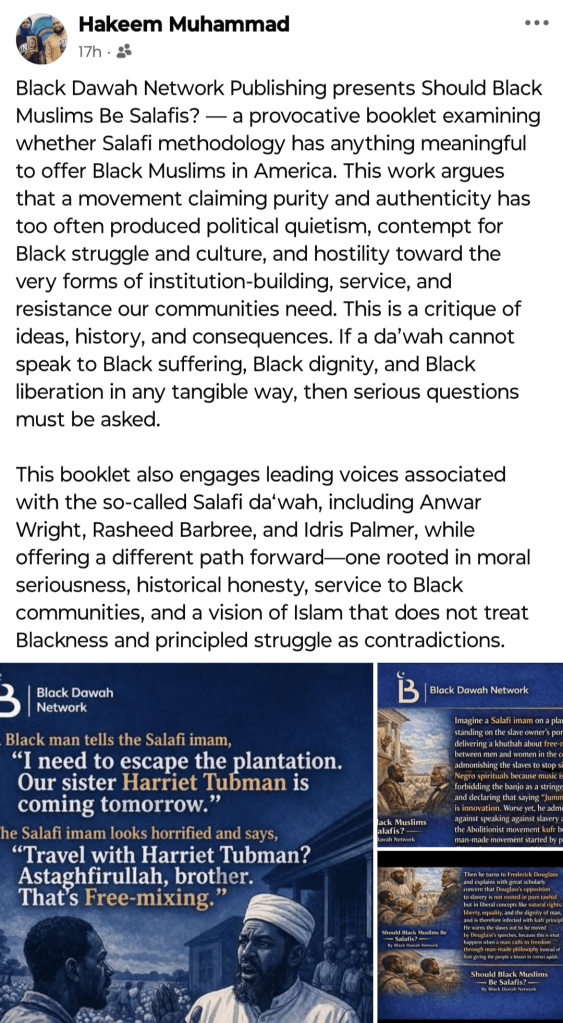
Hakeem Muhammad,
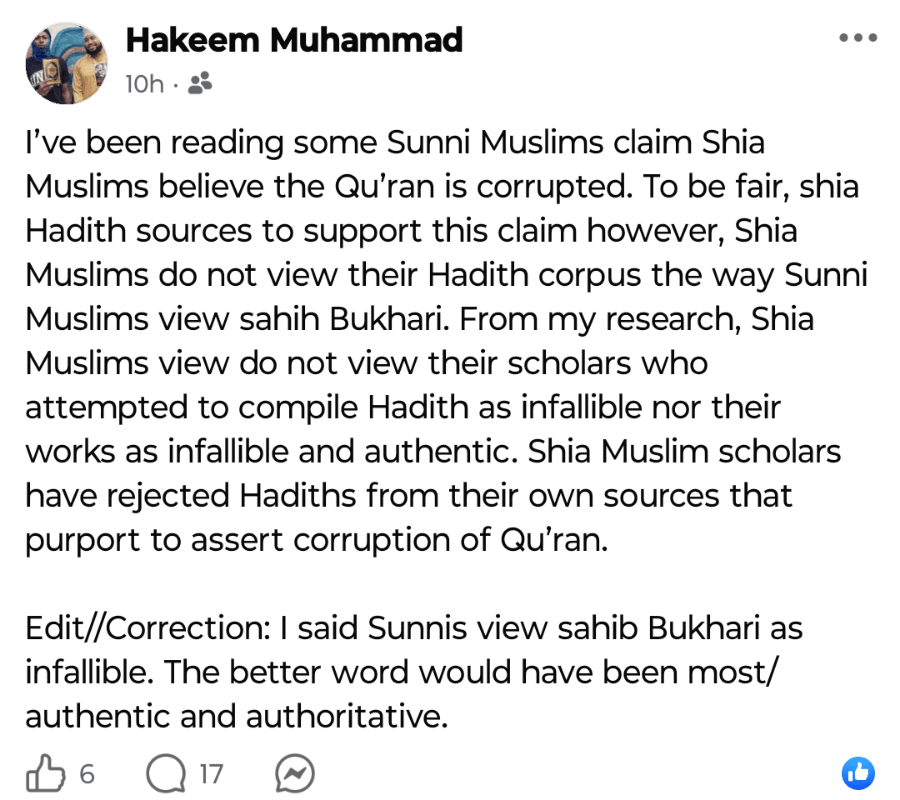
My brother, you need to step back from engaging in these theological debates because you are not qualified in the Islamic sciences. In your recent post, you claimed that Sunni Muslims view Hadith scholars as infallible. This is incorrect. Even after being corrected publicly, you edited your statement, which indicates a lack of proper grounding in the subject matter.
It is evident that you have not studied Al-Jāmiʿ as-Ṣaḥīḥ nor the science of Muṣṭalaḥ al-Ḥadīth. The more you speak and write on these topics, the more it becomes clear that your understanding is fundamentally flawed. This is not a minor issue—speaking about the religion of Islam without knowledge is dangerous.
To clarify what you are missing: the science of Hadith is a structured, rigorous discipline. Scholars analyze the isnād (chain of transmission) and the matn (text of the report). The isnād is scrutinized narrator by narrator, examining continuity (ittiṣāl), integrity (ʿadālah), and precision (ḍabṭ). Each transmitter is evaluated through the science of al-jarḥ wa al-taʿdīl, where scholars document reliability, memory, and credibility.
In addition, scholars assess whether a report is ṣaḥīḥ (authentic), ḥasan (sound), or ḍaʿīf (weak), based on strict criteria: an unbroken chain, trustworthy narrators, precise transmission, and the absence of hidden defects (ʿillah) or contradictions (shudhūdh).
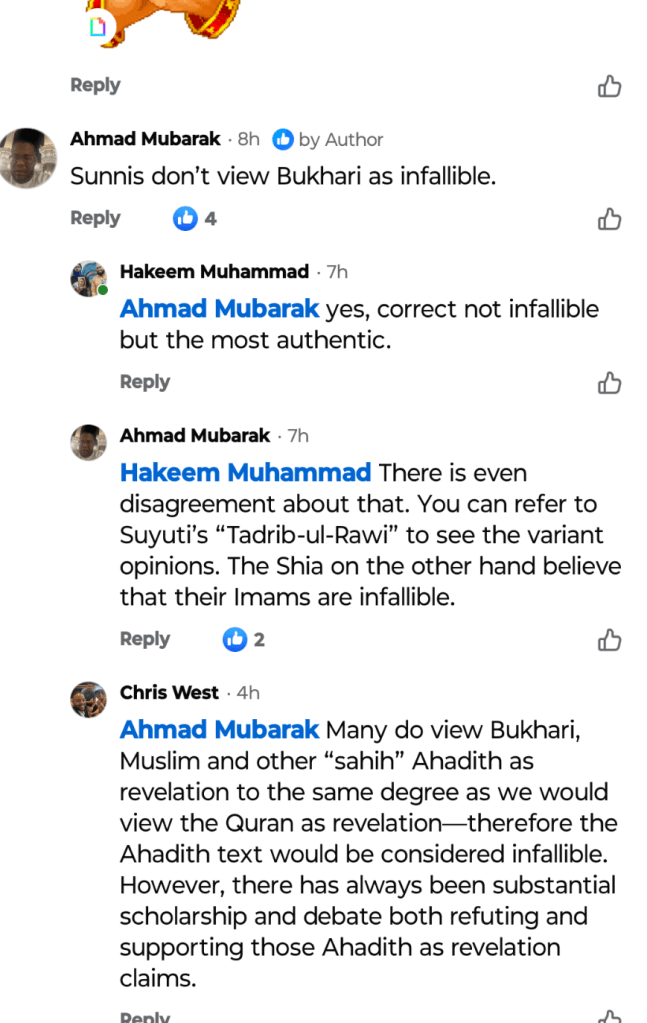
Regarding Al-Jāmiʿ as-Ṣaḥīḥ (Ṣaḥīḥ al-Bukhārī), it is not considered infallible. Rather, it is regarded as the most authentic collection due to the exceptionally stringent methodology of Imām al-Bukhārī. He required confirmed meeting between narrators, strong precision in transmission, and rigorous verification of chains. Even then, scholars still analyze individual narrations within it, discussing their chains and meanings within the broader framework of Hadith criticism.
These are foundational principles. Had you studied even the basics of Hadith sciences, you would not make claims suggesting that Sunni scholars consider Hadith compilers infallible.
Studying U.S. law does not make you a scholar of Islamic law. Had you studied even the foundational principles of Hadith sciences, you would know that Sunni scholars do not consider Hadith compilers infallible. Your assertions demonstrate a serious gap in knowledge, and at present, you are debating beyond your depth.
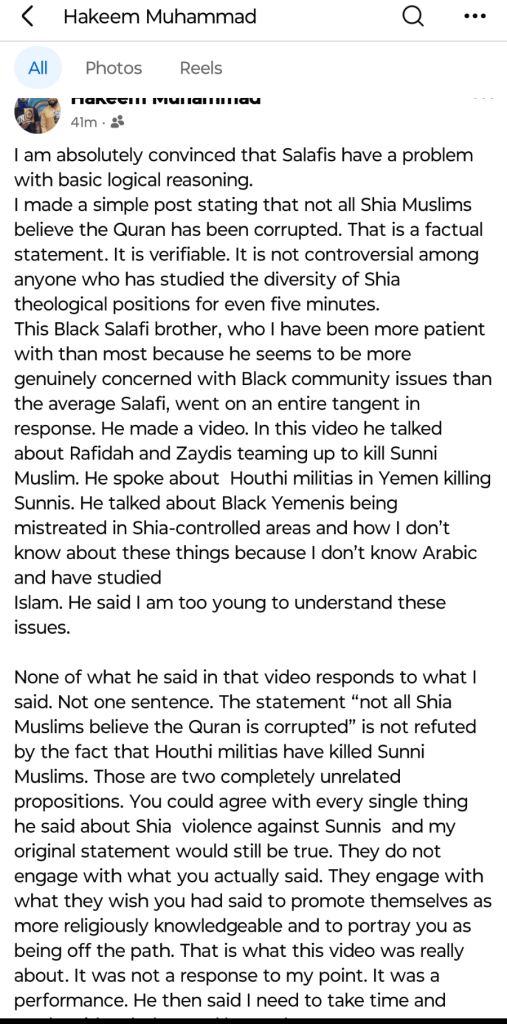
Continuing, I am not obligated to privatize my posts as you do. I speak openly and publicly, and I stand on what I say. Others may choose indirect methods—subtle criticism combined with restricted visibility—but I do not operate that way.
Your arguments reflect not only misinformation, but also inconsistency in focus. You claim to advocate for Black empowerment, yet you are actively engaging in discourse centered on Shiism and Iranian political narratives—topics that are not rooted in the lived realities or primary concerns of Black Americans or Black American Muslims.
You have also stated that you are writing a book addressing alleged anti-Blackness among Salafis in America. However, your current engagement in promoting or defending Shia theological positions has no direct relevance to Black communities. This contradiction raises legitimate concerns regarding your priorities and analytical framework.
There is a broader issue here: individuals within the Black Muslim community who lack a firm grounding in the Islamic sciences—particularly in Arabic, Shariah, and the classical scholarly tradition—are more susceptible to adopting positions without proper context or depth. Islam was revealed in Arabic, preserved in Arabic, and its sciences are inseparable from that linguistic and scholarly foundation. When that foundation is absent, confusion and misguidance become more likely—not only for the individual, but also for those influenced by them.
To be clear: this is a direct response to your statements. It is neither random nor tangential—it is a structured rebuttal addressing both your claims and their implications.
Addressing Claims of Anti-Blackness and Misrepresentation of Salafiyyah
Your statements portraying Salafiyyah as anti-Black have no merit. They rely on broad generalizations about groups and communities within America, as well as a movement you have not demonstrated a grounded understanding of.
What is being described in your narrative is not Salafiyyah as it is traditionally understood, but rather a form of neo-Salafism as practiced by certain insular groups. The characterization you present unfairly generalizes all Salafis, including those with formal training and adherence to established scholarly methodology.
I rely on formal Islamic training rooted in traditional studies under recognized Salafi scholars from the Muslim world. In addition, I have direct experience working with Black imams in New York, which has given me insight into the real challenges affecting Black communities, Muslims, and the broader Muslim population.
There are numerous Salafi brothers actively engaged in addressing social issues affecting Black communities. Their work is often grounded in da‘wah and practical community support, even if it is not always publicly framed in explicitly “pro-Black” language.
Examples include:
- Walee (The Dai47 Official Robinson)
- Aqil Ingram
- Mufti Ibn Muneer
- Haneef Davis
- Haneef Bashir
- Kwame Madden
- Naj Muhammad
- Imam Tariq Abdur Rashid
- Hasan Ibn Muhammad
Outside the United States:
- Thefeachaz
- Dr. Abdul Haqq Baker
Additionally, there are many imams and students of knowledge who intentionally maintain a low public profile. This is partly due to concerns over government scrutiny, including surveillance, as well as the broader perception of Islam—and particularly Black Muslim identity—as a potential threat.
This creates multiple layers of vulnerability: being Black, being Muslim, and being associated with Salafiyyah while addressing social issues. As a result, many choose to prioritize substance over visibility—focusing on direct community engagement, da‘wah, and addressing real-world problems affecting Black Muslims on a daily basis.
In conclusion, your arguments reflect a lack of scholarly grounding, inconsistency in focus, and a mischaracterization of Salafi methodology and community engagement. These are serious issues that require correction before engaging further in public theological discourse.

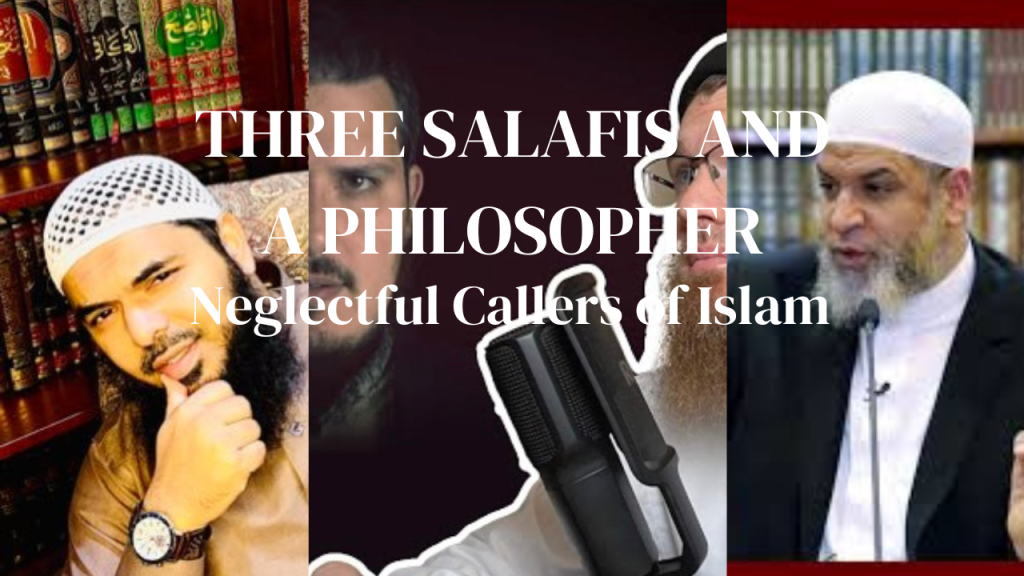

 Works of Abul Baraa Muhamad Amreeki
Leave a comment