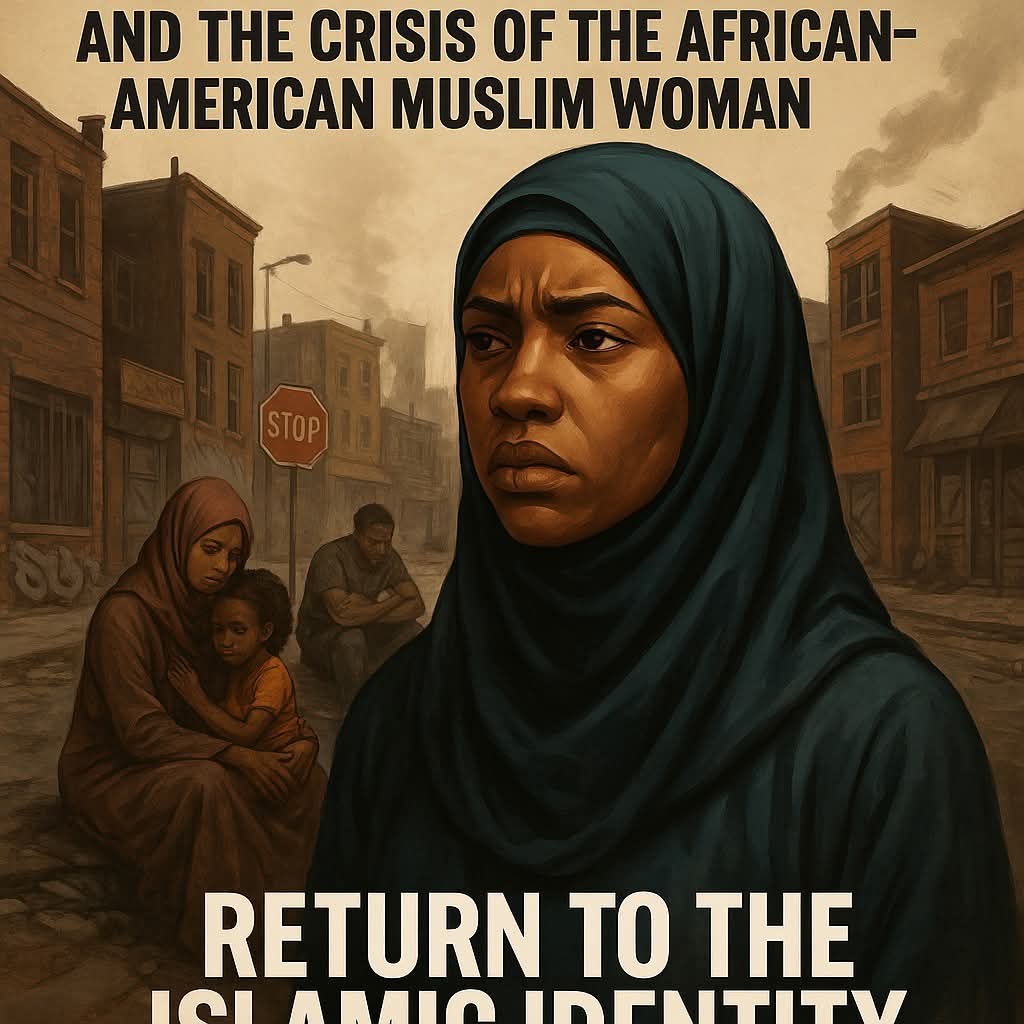
The Traits of the Wives of Prophet Nuh and Prophet Lut and the Crisis of the African-American Muslim Woman
Allah ﷻ tells us in the Qur’an about the wives of two great prophets — Nuh (Noah) and Lut (Lot) — who were condemned despite being married to messengers of Allah.
“Allah sets forth an example for the disbelievers: the wife of Nuh and the wife of Lut. They were married to two of Our righteous servants, yet they betrayed them, so their husbands could not benefit them against Allah in the least. It was said: ‘Enter the Fire along with those who enter it.’” (Surah At-Tahrim 66:10)
These women were physically close to prophets, sharing their homes and lives, but spiritually and ideologically, they were aligned with the disbelievers. Nuh’s wife rejected his message inwardly while pretending outwardly to support it, whereas Lut’s wife not only accepted but actively supported the corruption and immorality of her people. She was not herself engaged in homosexual acts, but she approved of them and betrayed her husband by calling the people to his home when the angels came as guests.
Her destruction was not because she committed the same sin, but because she embraced the culture and values of a corrupt society. This is the key lesson.
Modern Parallels in the African-American Muslim Community
In today’s America, particularly in the African-American Muslim community, we see disturbing parallels. Many Muslim women have adopted the slogans, attitudes, and values of a disbelieving culture designed to dismantle family structure — especially in the Black community.
America’s systems have historically targeted the Black household for destruction: slavery, Jim Crow, mass incarceration, welfare policies replacing fathers with government checks, and cultural propaganda that redefines womanhood as independence from men, rejection of marriage, and sexual freedom without accountability.
This propaganda is now wrapped in feminist slogans and LGBTQ acceptance, convincing women that rejecting their natural roles as wives and mothers is liberation. The Muslim woman who embraces these ideas is in danger of following the path of Lut’s wife — not necessarily committing the same sins, but approving of and promoting them.
Social Media and Cultural Adoption
Today, many African-American Muslim women openly follow, admire, and promote personalities from LGBTQ and hypersexualized circles — sharing content from homosexual influencers, transgender makeup artists, and entertainers who embody values Islam rejects.
Some champion feminist causes that deny the importance of marriage, mock male leadership, and encourage living without the family structure Allah commands. They wear hijab but carry within them the identity of the disbelieving woman — not the identity of Khadijah, Fatimah, or Aisha رضي الله عنهن — women who were strong in faith, obedient to Allah, supportive of their husbands, and committed to preserving the family.
The Islamic Standard vs. the Disbelieving Standard
Islam’s standard for women is not “I don’t need a man,” “I can raise children without marriage,” or “My body, my choice.” These are slogans of the kuffar. The standard of Islam is:
Marriage as the foundation of family.
The woman as caretaker and nurturer of the home, in partnership with her husband.
The man as protector, maintainer, and financial supporter of the household.
The Prophet ﷺ said:
“All of you are shepherds, and each of you will be asked about his flock. The leader is a shepherd over his people, a man is a shepherd over his household, and a woman is a shepherd over her husband’s house and his children.” (Bukhari & Muslim)
When women adopt a disbelieving identity, they weaken the very foundation of the ummah. And in the African-American context, this means continuing the cycle of broken homes, children without guidance, and a community without stability.
Immigrant Muslims vs. African-American Muslims
In many immigrant Muslim communities in the U.S., despite the pressures of American culture, women often retain aspects of the Islamic family model — marrying, staying married, and prioritizing family life. Meanwhile, in some African-American Muslim communities, it is common to see women unmarried, raising children alone, or divorcing repeatedly, while clinging to American definitions of womanhood that undermine Islamic principles.
This is not to say all African-American Muslim women fall into this category, but enough do that it has become a visible crisis.
The Root Problem
The core issue is tarbiyah — upbringing and education. Many African-American Muslim women have not been raised with Islamic tarbiyah (education and moral formation) but with the values of American society. This makes it difficult for them to fully accept Islamic family structure, even if they acknowledge it as part of their religion.
And because women are the first teachers of the next generation, when they are misled, entire generations are misled. Dysfunction in the woman leads to dysfunction in the children, which leads to dysfunction in the community.
A Call to Return to the Islamic Identity
The wives of Nuh and Lut serve as a permanent warning: being close to righteousness means nothing if your loyalty and identity are with a disbelieving culture. If Muslim women — particularly African-American Muslim women — do not uproot the kuffar identity from their thinking and adopt the Islamic identity fully, they risk the same fate.
The solution is not silence. The solution is targeted Islamic education for women, reviving the Islamic understanding of family, marriage, and womanhood. It is rejecting the slogans and standards of the disbelievers and embracing the obedience, modesty, and strength of the believing women whom Allah and His Messenger ﷺ praised.
If we fail to do this, we will continue to see the destruction of the Black Muslim household — by the same forces, and through the same patterns, that destroyed the people of Lut.
Qur’an and Sunnah References
- Righteous Women Are Obedient to Allah and Protect the Household
فَالصَّالِحَاتُ قَانِتَاتٌ حَافِظَاتٌ لِّلْغَيْبِ بِمَا حَفِظَ اللَّهُ
“So righteous women are devoutly obedient, guarding in [the husband’s] absence what Allah would have them guard.” (Surah An-Nisa 4:34) - Example of the Wife of Pharaoh (Asiya) — Model of Uprightness in a Corrupt Society
وَضَرَبَ ٱللَّهُ مَثَلًۭا لِّلَّذِينَ ءَامَنُوا۟ ٱمْرَأَتَ فِرْعَوْنَ إِذْ قَالَتْ رَبِّ ٱبْنِ لِى عِندَكَ بَيْتًۭا فِى ٱلْجَنَّةِ وَنَجِّنِى مِن فِرْعَوْنَ وَعَمَلِهِۦ وَنَجِّنِى مِنَ ٱلْقَوْمِ ٱلظَّـٰلِمِينَ
“And Allah has set forth an example for those who believe: the wife of Pharaoh, when she said, ‘My Lord, build for me a house with You in Paradise and save me from Pharaoh and his deeds, and save me from the wrongdoing people.’” (Surah At-Tahrim 66:11) - Example of Maryam (Mary) — Purity and Obedience
وَمَرْيَمَ ٱبْنَتَ عِمْرَٰنَ ٱلَّتِىٓ أَحْصَنَتْ فَرْجَهَا فَنَفَخْنَا فِيهِ مِن رُّوحِنَا وَصَدَّقَتْ بِكَلِمَـٰتِ رَبِّهَا وَكُتُبِهِۦ وَكَانَتْ مِنَ ٱلْقَـٰنِتِينَ
“And Mary, the daughter of Imran, who guarded her chastity, so We breathed into her of Our Spirit, and she believed in the words of her Lord and His Scriptures, and she was of the devoutly obedient.” (Surah At-Tahrim 66:12) - Warning Against Disobedient Women — Wives of Nuh and Lut
ضَرَبَ ٱللَّهُ مَثَلًۭا لِّلَّذِينَ كَفَرُوا۟ ٱمْرَأَتَ نُوحٍۢ وَٱمْرَأَتَ لُوطٍۢ كَانَتَا تَحْتَ عَبْدَيْنِ مِنْ عِبَادِنَا صَـٰلِحَيْنِ فَخَانَتَاهُمَا فَلَمْ يُغْنِيَا عَنْهُمَا مِنَ ٱللَّهِ شَيْـًۭٔا وَقِيلَ ٱدْخُلَا ٱلنَّارَ مَعَ ٱلدَّٰخِلِينَ
“Allah sets forth an example for the disbelievers: the wife of Nuh and the wife of Lut. They were married to two of Our righteous servants, yet they betrayed them, so their husbands could not benefit them against Allah in the least. It was said: ‘Enter the Fire along with those who enter it.’” (Surah At-Tahrim 66:10) - Warning to Women Who Display Themselves Like in the Time of Ignorance
وَقَرْنَ فِى بُيُوتِكُنَّ وَلَا تَبَرَّجْنَ تَبَرُّجَ ٱلْجَـٰهِلِيَّةِ ٱلْأُولَىٰ
“And remain in your homes and do not display yourselves as [was] the display of the former times of ignorance.” (Surah Al-Ahzab 33:33) - Hadith — The Best of Women
The Prophet ﷺ said:
“Shall I not inform you of the best treasure a man can have? A righteous woman who, when he looks at her, pleases him; when he commands her, she obeys him; and when he is absent, she protects herself and his property.”
(Narrated by Abu Dawud, 1664)
- Hadith — Warning About the Trials of Women
The Prophet ﷺ said:
“I have not left behind me a greater fitnah (trial) for men than women.”
(Narrated by al-Bukhari and Muslim)
- Hadith — Women Who Disobey Allah
The Prophet ﷺ said:
“If a woman prays her five daily prayers, fasts her month (Ramadan), guards her chastity, and obeys her husband, it will be said to her: ‘Enter Paradise from whichever of the gates of Paradise you wish.’”
(Narrated by Ahmad, 1664)
And he ﷺ also said regarding women who disobey Allah and their husbands:
“Two types of the people of Hell I have not seen: … women who are clothed yet naked, walking with an enticing gait, with their heads like the humps of camels — they will not enter Paradise, nor even smell its fragrance.”
(Narrated by Muslim)
Written by Abul Baraa Muhammad Amreeki




 Works of Abul Baraa Muhamad Amreeki
Leave a comment