

Fatwaa Shaykh Bin Baz Making Dhikr Out-loud together following the Imam or Someone after the Salah
________________________________________________________________________________________________________________________
________________________________________________________________________________________________________________________
Question: it was also asked with the Tasbeeh after finishing the Salah I have noticed that a particular person standing and he performs a lot of Tasbeeh ( different remembrance remembering & glorifying Allah) with his voice raised after the salah while the Muadhan (caller of the prayer) is predominately performing it in a fast pace so the followers in the prayer can repeat after him correctly. So what is the ruling on this?
Answer: It is legislated for the believer that he remembers Allah (Tasheeh & Adhkaar) after the Salah with his self, nor does he follow the Imam or other than him (in that). When he tasleem out of the Salah he says:
أستغفر الله، أستغفر الله، أستغفر الله، اللهم أنت السلام، ومنك السلام، تباركت يا ذا الجلال والإكرام
Istaghfer Allah, Istaghfer Allah, Istaghfer Allah. Allahuma anta As-salam wa minka As-salam tabaarakta yaa Dha al-Jalaal wa al-ikraam
I ask Allah to forgive me, I ask Allah to forgive me, I ask Allah to forgive me
O’ Allah, You are the Peace, and You are the Source of Peace, You are Blessed, Oh Possessor of Glory and Honor
This is from the Sunnah, and the Imam turns around to the people after this, afterward, this Dhkir is said so when the Imam he turns around to the people, and he faces them, then say:
لا إله إلا الله وحده لا شريك له، له الملك وله الحمد وهو على كل شيء قدير
Laa ilaaha ill-allaahu, waḥdahu laa shareeka lahu, lahul-mulku wa lahul-ḥamdu, wa huwa ‛alaa kulli shay’in qadeer
None has the right to be worshipped except Allah, alone, without partner, to Him belongs all sovereignty and praise and He is over all things omnipotent.
If he wishes to say:
حيي ويميت وهو على كل شيء قدير
Yuyee wa yumeet wa huwa alaa kuli shayin Qadeer
The Giver of Life and Death and upon Him all things are possible
Then he says:
لا حول ولا قوة إلا بالله، لا إله إلا الله، ولا نعبد إلا إياه، له النعمة وله الفضل وله الثناء الحسن، لا إله إلا الله مخلصين له الدين ولو كره الكافرون،
La hawla wa laqu-aata illah billah, la ilaha illAllah wala na’budu illayyah, lahun-ni’matu, wa lahul fadl, wa lahu-saana ul hasanu, la ilaha illAllahhu mukhliseena lahudeen, wa law karihal kafiroonThere is no might nor power except with Allah, none has the right to be worshipped except Allah and we worship none except Him. For Him is all favor, grace, and glorious praise. None has the right to be worshipped except Allah and we are sincere in faith and devotion to Him although the disbelievers detest it
اللَّهُمَّ لاَ مَانِعَ لِمَا أَعْطَيْتَ وَلاَ مُعْطِيَ لِمَا مَنَعْتَ وَلاَ يَنْفَعُ ذَا الْجَدِّ مِنْكَ الْجَدُّ
Allahuma la Maani’a lima A’t’ayta wa la Mu’tiya lama mana’ta wa la yanfa’u dha aljaddi minka aljaddu
No one can withhold what Thou givest or give what Thou withholdest, and riches cannot avail a wealthy person against Thee.
Then he says:
سبحان الله والحمد لله والله أكبر
Sub-han AllahAlhamdu lillahAllah hu Akbar
Thirty-three times, making it ninety-nine then completing it to 100 times with saying:
لا إله إلا الله وحده لا شريك له، له الملك وله الحمد وهو على كل شيء قدير
Laa ilaaha ill-allaahu, waḥdahu laa shareeka lahu, lahul-mulku wa lahul-ḥamdu, wa huwa ‛alaa kulli shay’in qadeer
None has the right to be worshipped except Allah, alone, without partner, to Him belongs all sovereignty and praise and He is over all things omnipotent.
The Prophet salahu wa alyhi wa salam said: “Whoever said this it is forgiven for him his past sins and his mistakes are forgiven even if it was like the foam of the ocean ( a lot)”.
So this is a mighty bounty so it is binding for the Imam, and those who pray behind the Imam, and individuals who pray by themselves that they come with this Adkaar (remembrance)it is the Sunnah after the Salah.
It is not legislated for those who follow behind in the congregation to follow the Imam or other them him, rather they do Tashbeeh with his personal self, and he remembers Allah (with Dhkir) by himself. Each individual does dkhir by himself in what is between him, and between his self and between his Lord, and he raises his voice sometimes until he is able to hear (his self). Because raising the voice with Dkhir after Salah is known in the legislation. This is the correct way, Ibn Abbas radillahu anhuma said: raising the voice with the Dhkir when they finish the Fard Salah was known in the time of the Prophet sallahu wa alyhi wa salam. Ibn Abbas also said: It was known to me when the people finished the Salah and by saying this Dhikr and I heard it so it is the Sunnah is to raise the voice with this Dhikr but raise it with a middle tone (not very loud), not to disturb anybody, but this Dhikr when the people hear it they know the Salah is finish. Until he who at the masjids’ doors knows that the Salah is done (when they hear this Dhkir after Salah), this is from the Sunnah.
Then it is legislated for the Believers that he recite correctly Ayatul Kurse:
اللَّهُ لا إِلَهَ إِلَّا هُوَ الْحَيُّ الْقَيُّومُ [البقرة:255]
Pronunciation255. Allahu la ilaha illahuwa alhayyu alqayyoomu la ta/khuthuhusinatun wala nawmun lahu ma fee assamawatiwama fee al-ardi man tha allatheeyashfaAAu AAindahu illa bi-ithnihi yaAAlamu mabayna aydeehim wama khalfahum wala yuheetoonabishay-in min AAilmihi illa bima shaawasiAAa kursiyyuhu assamawati wal-ardawala yaooduhu hifthuhumawahuwa alAAaliyyu alAAatheemTranslation255. Allah – there is no deity except Him, the Ever-Living, the Sustainer of [all] existence. Neither drowsiness overtakes Him nor sleep. To Him belongs whatever is in the heavens and whatever is on the earth. Who is it that can intercede with Him except by His permission? He knows what is [presently] before them and what will be after them, and they encompass not a thing of His knowledge except for what He wills. His Kursi extends over the heavens and the earth, and their preservation tires Him not. And He is the Most High, the Most Great.
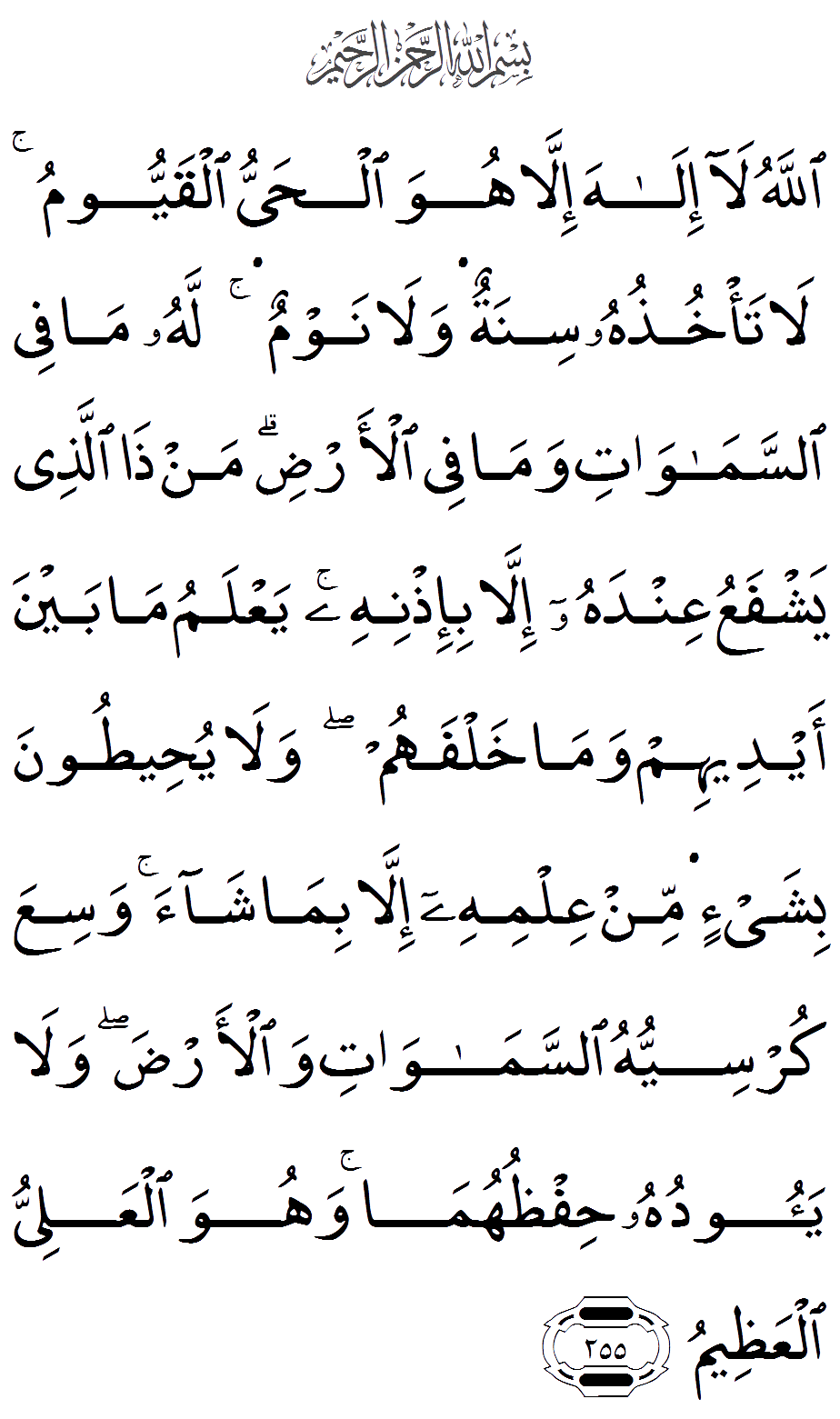
Then it is legislated after this he read Surah Iklaas قل هو الله أحد and Surah Falaq and Surah Nass. After each Salah read Surah Iklaas, Surah Falaq, Surah Naas, one time after Dhur and Asr and Ishaa Salah. Concerning after al Magrib and Fajr Salah repeat it three times, this is what is preferred & better قل هو الله أحد، وقل أعوذ برب الفلق، قل أعوذ برب الناس Surah Iklaas and Falaq and Nass. This is what is legislated to do after the prayers as it came from the Prophet sallahu wa alayhi wa salam.
Translated by Abul Baraa Muhammad Amreeki
——————————————————————————————————————————————————————————————————————

ما يقال بعد الصلاة
ولا يشرع للمأموم أن يتابع الإمام أو غيره بل يسبح بنفسه ويذكر الله بنفسه، كل واحد يذكر الله بنفسه فيما بينه وبين نفسه وبين ربه، ويرفع صوته بعض الشيء حتى يسمع؛ لأن رفع الصوت بالذكر بعد الصلاة مشروع، هذا هو الصواب، قال ابن عباس رضي الله تعالى عنهما: كان رفع الصوت بالذكر حين ينصرف الناس من المكتوبة على عهد النبي ﷺ ، قال ابن عباس: كنت أعلم إذا انصرفوا بذلك إذا سمعته، فالسنة رفع الصوت لكن رفعاً متوسطاً، لا يشوش على أحد ولكنه يسمعه الناس، يعلم الناس أن الصلاة انتهت، حتى الذي عند أبواب المساجد يعلمون ذلك، هذا هو السنة.
ثم بعد هذا يشرع للمؤمن أن يقرأ آية الكرسي على الصحيح اللَّهُ لا إِلَهَ إِلَّا هُوَ الْحَيُّ الْقَيُّومُ [البقرة:255] ثم يشرع بعد هذا أن يقرأ قل هو الله أحد والمعوذتين، بعد كل صلاة، قل هو الله أحد، و قل أعوذ برب الفلق، وقل أعوذ برب الناس، مرة واحدة بعد الظهر بعد العصر بعد العشاء، أما بعد المغرب وبعد الفجر فيكررها ثلاث مرات، هذا هو الأفضل، قل هو الله أحد، وقل أعوذ برب الفلق، وقل أعوذ برب الناس، هذا هو المشروع بعد الصلوات كما جاء ذلك عن النبي عليه الصلاة والسلام. نعم.

 Works of Abul Baraa Muhamad Amreeki
Leave a comment